
7 февраля 2023

The smart pharmaceutical and healthcare labels market is anticipated to grow at a CAGR of 16%, till 2035, claims Roots Analysis
In order to overcome the limitations and challenges related to counterfeit drugs, researchers and industry stakeholders are gradually adopting smart pharmaceutical and healthcare labels, which offer multiple benefits over conventional labels.
Roots Analysis has announced the addition of “Smart Pharmaceutical and Healthcare Labels Market, 2022-2035” report to its list of offerings.
A smart label comprises of printed information, a bar code identifier and a small transponder. This transponder contains a processing chip and an antenna that allows physical objects to communicate with the tag reader (for instance, RFID reader). Smart labels offer several benefits, such as tracing and tracking products in a supply chain, tamper proofing, as well as discouraging counterfeiters from packaging fake drugs. In this context, it is worth mentioning that smart labelling technology can potentially save USD 0.8 - 1.5 million per year, per company, through their applications in inventory management.
Key Market Insights
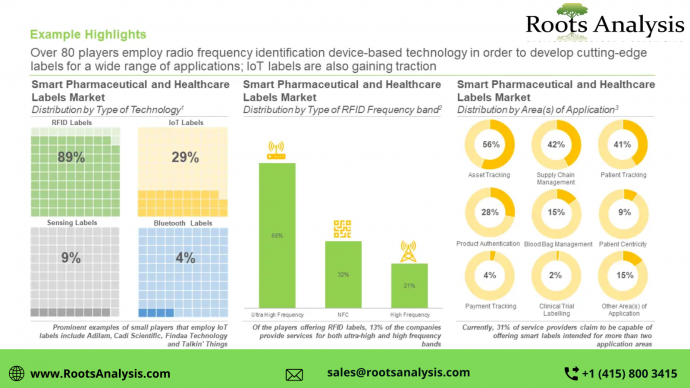
More than 90 companies claim to offer smart pharmaceutical and healthcare labels, globally
This segment of the industry is dominated by the presence of mid-sized (51-500 employees) and small (less than 50 employees) players, which collectively represent more than 75% of the total smart label providers in pharmaceutical and healthcare sectors. Further, ~20% of firms were established post-2010.
400+ patents related to smart pharmaceutical and healthcare labels were filed / granted, since 2015
Based on intellectual property distribution across the world, R&D activity related to smart pharmaceutical and healthcare labels is largely concentrated in North America (over 65%), followed by Europe (10%). In addition, most of the patents have been granted patent (55%), followed by patent applications (44%).
Partnership activity in this domain has increased at a significant pace, between 2018 and 2022
The recent partnerships trend in this market indicates the growing interest of industry stakeholders. It is worth highlighting that majority of the deals were service alliances, representing around 41% of the total number of partnerships signed in the given time period.
North America and Europe are anticipated to capture over 65% of the market share by 2035
The markets in Asia-Pacific and Latin America are anticipated to grow at a relatively faster pace. In the long-term, the aforementioned regions are expected to collectively represent 33% of the total market share. In addition, RFID based smart labels are likely to capture more than 75% of the market share in 2035.
To request a sample copy / brochure of this report, please visit this https://www.rootsanalysis.com/reports/smart-labels-market/request-sample.html
Key Questions Answered
Who are the leading players engaged in the development of smart pharmaceutical and healthcare labels?
What is the relative competitiveness of different smart pharmaceutical and healthcare labels providers?
Which types of partnership models are most commonly being adopted by stakeholders engaged in this domain?
What are the key strategies that can be implemented by emerging players / start-ups to enter the highly competitive market for smart labels for the healthcare sector?
Which companies are actively filing patents to drive innovation in the field of smart pharmaceutical and healthcare labels?
What are the key challenges within the smart pharmaceutical and healthcare labels market?
What is the current / likely future market size of smart pharmaceutical and healthcare labels?
The financial opportunity within the smart pharmaceutical and healthcare labels market has been analyzed across the following segments:
Type of Technology
RFID
NFC
Other Technologies
Type of packaging
Primary Packaging
Secondary Packaging
Type of Primary Packaging
Vials
Syringes
Cartridges
Ampoules
Bottles
Blister Packs
Type of Secondary Packaging
Boxes
Cartons
Pouches
Key Geographical Regions
North America
Europe
Asia-Pacific
MENA
Latin America
The report includes detailed profiles of key players (listed below) engaged in providing smart pharmaceutical and healthcare labels; each profile features an overview of the developer, details related to smart labels focused product portfolio, recent developments and an informed future outlook:
CCL Industries
Schreiner
Datalogic
Tadbik
SATO
Invengo
Intellhydro Technology
RFiD Discovery
ID Tech Solutions
For additional details, please visit https://www.rootsanalysis.com/reports/smart-labels-market.html or email sales@rootsanalysis.com
You may also be interested in the following titles:
1. Pharmaceutical Secondary Packaging Market: Industry Trends and Global Forecast, 2022-2035
2. AI-based Digital Pathology / AI Pathology Market: Industry Trends and Global Forecasts, 2022-2035
About Roots Analysis
Roots Analysis is a global leader in the pharma / biotech market research. Having worked with over 750 clients worldwide, including Fortune 500 companies, start-ups, academia, venture capitalists and strategic investors for more than a decade, we offer a highly analytical / data-driven perspective to a network of over 450,000 senior industry stakeholders looking for credible market insights.
Contact:
Ben Johnson
+1 (415) 800 3415
ben.johnson@rootsanalysis.com

6 февраля 2023
The TCR-based therapy market is projected to grow at an annualized rate of 51%, claims Roots Analysis
Given the recent approval of a TCR-based therapy, industry stakeholders have initiated several R&D efforts focused on evaluating the potential of such therapy candidates against various disease indications
Roots Analysis has announced the addition of “Global TCR-based Therapy Market (2nd Edition), 2022-2035” report to its list of offerings.
Modified T-cell receptor therapy (TCR therapy) is an emerging class of adoptive therapy that employs genetically modified lymphocytes to target specific tumor markers. Growing burden and unaddressed complex treatment needs of cancer patients have paved the way for more effective, safe and versatile alternatives, such as TCR therapies. Driven by Kimmtrak® approval, promising development pipeline and encouraging clinical trial results, the TCR-based therapy market is anticipated to witness significant growth in the mid to long-term
Key Market Insights
Over 190 TCR-based therapies are currently approved / under development
Close to 45% of the aforementioned candidates are being evaluated in clinical trials (phase I and above), while 30% of them are in preclinical stage of development. More than 90% of the therapy candidates, which are being developed to target a range of disease indications, are autologous in nature. Further, NY-ESO-1 and MAGE have emerged as the most popular target antigens.
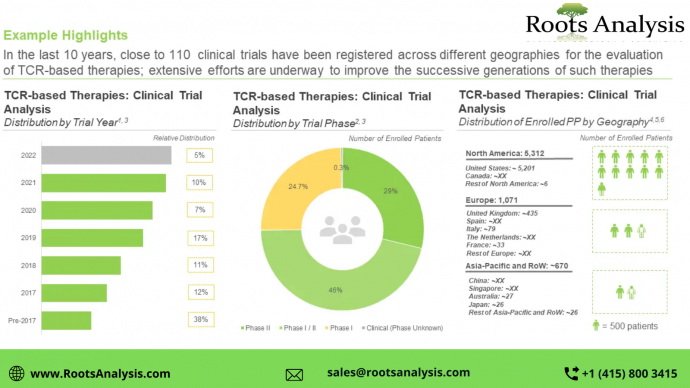
More than 7,000 patients have been enrolled in nearly 110 clinical trials, worldwide
Clinical research activity, in terms of number of trials registered, is reported to have increased over the last five years. Of the total number of trials, close to 65% are active and still recruiting patients, while close to 26% have already been completed.
Partnership activity within this domain has grown at a CAGR of 27%, between 2015 and 2021
More than 70 agreements have been inked in the last 5 years. Majority of partnership deals signed within this domain were R&D agreements (26%), licensing agreements (21%), and product development and commercialization agreements (16%).
Over 11.2 USD billion has been invested by both private and public investors in this domain, since 2007
Specifically, in 2020 and 2021, industry players raised over USD 2.7 billion. In addition, majority (39%) of the companies primarily received funding through venture capital rounds. Further, around 70% of the total funding instances were reported by players headquartered in the US.
More than 70 patents have been filed / published related to the TCR-based therapies
Close to 85% of the filed / published patents were patent applications, while around 15% were granted patents and others. Of the total granted applications, close to 45% were filed in North America and Europe.
The market is anticipated to grow at a CAGR of 51%, during the period 2022-2035
In 2035, close to 60% of the market revenues are expected to be generated from sales of therapeutics intended for Nasopharyngeal Carcinoma and Multiple Myeloma. Further, therapies targeting for NY-ESO-1 are expected to occupy a larger share (~50%) of the overall market in 2035.
To request a sample copy / brochure of this report, please visit
https://www.rootsanalysis.com/reports/tcr-based-therapies-market/request-sample.html
Key Questions Answered
What is the growth rate of TCR-based therapy market?
Which region has the highest growth rate in the TCR-based Therapies market?
Who are the leading industry and non-industry players in this market?
How many players are developing TCR-based Therapies?
Which target indication covers the largest TCR-based therapy market share?
What is the partnership and collaboration trend in the TCR-based therapy domain?
What is the current IP landscape of TCR-based therapies market?
The financial opportunity within the TCR-based therapies market has been analyzed across the following segments:
Target Indication(s)
Nasopharyngeal Carcinoma
Multiple Myeloma
Head and Neck Carcinoma
Sarcoma, Melanoma
Acute Myeloid Leukemia
Lung Cancer
Ovarian Cancer
Merkel Cell Cancer
Target Antigen
NY-ESO-1
EBV
gp100
Others
Key Geographical Regions
North America
Europe
Asia Pacific
Latin America
Middle East and North Africa
Rest of the World
The report features inputs from eminent industry stakeholders, according to whom, T-cell immunotherapies are expected to be the next big step in cancer immunotherapy. The report includes detailed transcripts of discussions held with the following experts:
Vincent Brichard (Vice President, Immuno-Oncology, Celyad)
Adrian Bot (Vice President, Scientific Affairs, Kite Pharma)
Victor Lietao Li (Co-Founder and Chief Executive Officer, Lion TCR)
Miguel Forte (Former Chief Operating Officer, TxCell)
The report includes brief profiles of key players (listed below); each profile features an overview of the company, details related to its financial information (if available), details about TCR-based product(s), such as information on type of therapy and current development status, information on technology portfolio (if available), recent developments related to TCR-based therapies and manufacturing capabilities of the players.
Adaptimmune Therapeutics
Alaunos Therapeutics
Bristol Myers Squibb
Cellular Biomedicine Group
Gilead Sciences
GlaxoSmithKline
Immatics
Immunocore
Lion TCR
Takara Bio
Zelluna Immunotherapy
For additional details, please visit https://www.rootsanalysis.com/reports/tcr-based-therapies-market.html or email sales@rootsanalysis.com
You may also be interested in the following titles:
1. Global T-Cell (CAR-T, TCR, and TIL) Therapy Market (6th Edition), 2022- 2035
2. mRNA Therapeutics and mRNA Vaccines Market (2nd Edition), 2022-2035
About Roots Analysis
Roots Analysis is a global leader in the pharma / biotech market research. Having worked with over 750 clients worldwide, including Fortune 500 companies, start-ups, academia, venture capitalists and strategic investors for more than a decade, we offer a highly analytical / data-driven perspective to a network of over 450,000 senior industry stakeholders looking for credible market insights.
Contact:
Ben Johnson
+1 (415) 800 3415
ben.johnson@rootsanalysis.com
3 февраля 2023
DRIVEN BY THE GROWING DEMAND FOR MEDICAL DEVICES, NOVEL COATINGS PROVIDING UNIQUE FEATURES ARE BEING INTRODUCED IN THE MARKET
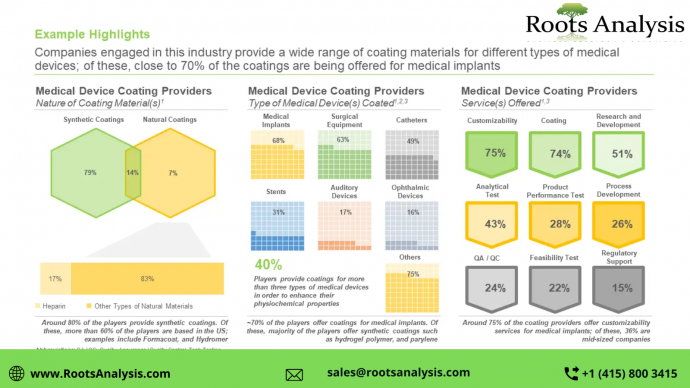
Over the past 50 years, the medical device industry has seen several notable developments. In fact, the use of biomedical devices, such as medical implants, surgical instruments, and prostheses has increased substantially over the time.
Cardioverter defibrillators, prosthetic hips and knees, contact lenses, and cardiac pacemakers are some of the most commonly implanted medical devices, while fixation devices and artificial joints account for about 44% of all medical devices. Despite significant advancements in the design and implantation of medical devices, a number of challenges still persist. Patients, particularly those who are immunocompromised, are at high risk of healthcare-associated infections (HAIs) due to the in-dwelling nature of implanted devices and surgical tools. The risk of infections along with limitations including, implant rejection, osseointegration, degradation and wear, loom over the prosthetic integration. Coatings on biomedical implants can affect this biological interaction between the implant and host, mitigate joint wear, and combine the properties of several materials to enhance device performance as well as reduce the risks associated with invasive medical devices. Medical device coatings also endow properties like lubrication, anti-fouling nature, as well as enhanced durability to the surface of the device. Driven by the surge in demand for various types of medical devices and the need for a wide array of coatings for these devices, the medical device coatings market is anticipated to witness a steady growth in the coming decade.
To request a sample copy / brochure of this report, please visit this https://www.rootsanalysis.com/reports/medical-device-coatings-market/request-sample.html
One of the key challenges associated with in-dwelling medical devices lies in the fact that they are in constant association with the bodily fluids, therefore, interacting with a wide variety of proteins and other biomolecules. This results in denaturization of the biomaterials over time, reducing the overall functional life of the device. As a counter to this problem, surface modification can be utilized. Generally, protein adsorption and biological interactions are significantly impacted by the biomaterial surface modifications, such as modifying the chemistry of polymers, coefficient of friction, domain layout, and shape. Surface modifications, such as plasma spraying, vacuum depositions, etching, and electro-depositions are some of the most frequently procedures to achieve the necessary alterations on medical device surfaces.
Various medical devices are associated with the risk of infections, cytotoxicity, thrombogenesis, and immune rejection, which has garnered the attention towards appropriate selection of suitable biomaterials and strategies for modifying the medical devices surface. One of the key developments in the area has been made in creating non-fouling / antibacterial surfaces. A breakthrough in this field has been witnessed in graphene coatings developed to elicit antimicrobial properties. As an alternative to the use of silver nanoparticles earlier, the use of graphene in healthcare applications has a promising future, given the fact that graphene would provide more secure antibacterial properties than metal nanoparticles along with cost efficiency. The detailed competitiveness analysis of various medical device coating providers identified during our research, which are based in North America, Europe, and Asia.
Integration of new technologies like advanced laser processing, machine learning, and automation using Artificial Intelligence (AI) also drives the field towards more precise and reproducible coating / surface treatment applications, which can revolutionize the biomedical devices industry.
For additional details, please visit https://www.rootsanalysis.com/reports/medical-device-coatings-market.html or email sales@rootsanalysis.com
You may also be interested in the following titles:
1. Targeted protein degradation market, 2022-2035
2. Single-Use Upstream Bioprocessing Technology / Equipment Market, 2022-2035
About Roots Analysis
Roots Analysis is a global leader in the pharma / biotech market research. Having worked with over 750 clients worldwide, including Fortune 500 companies, start-ups, academia, venture capitalists and strategic investors for more than a decade, we offer a highly analytical / data-driven perspective to a network of over 450,000 senior industry stakeholders looking for credible market insights.
Contact:
Ben Johnson
+1 (415) 800 3415
+44 (122) 391 1091
Ben.johnson@rootsanalysis.com
2 февраля 2023
The mRNA synthesis and manufacturing market is projected to be worth USD 1.5 billion by 2035, claims Roots Analysis
Given the current technical and operational challenges associated with the manufacturing of mRNA-based products, innovators in the biopharmaceutical industry are increasingly relying on the mRNA synthesis and contract manufacturing service providers.
Roots Analysis has announced the addition of “mRNA Synthesis and Manufacturing Services Market (2nd Edition), 2022–2035” report to its list of offerings.
Owing to the recent success and growing pipeline of mRNA-based products in the market, mRNA, as a therapeutic agent, has gained significant traction from the medical community. However, due to challenges, such as high capital requirement, stringent regulations and lack of technical expertise, outsourcing has become a preferred business model and CMOs are upgrading their existing capabilities and service portfolios to meet the increased demand for mRNA-based products.
Key Market Insights
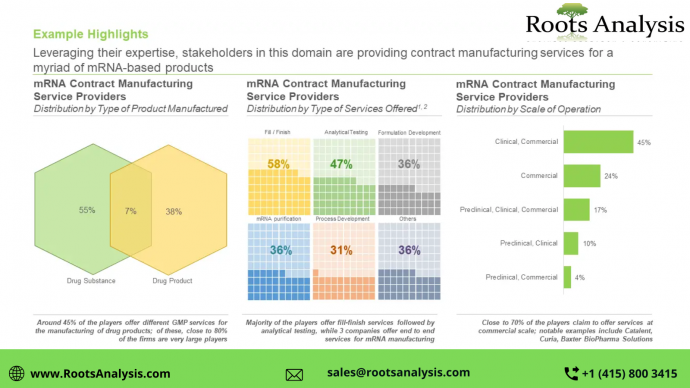
Presently, 30+ companies claim to offer custom synthesis services for mRNA, globally.
Majority of the service providers are mid-sized players (44%), followed by small (35%), large (12%) and very large players (9%). Additionally, more than 25% of the stakeholders were established post 2010. It is also worth mentioning that over 50% of the total players are based in North America, specifically in the US.
More than 40 companies, across the globe, claim to provide contract manufacturing and fill / finish services for mRNA vaccines / therapeutics.
Of the aforementioned players, nearly 85% of the contract manufacturing service providers are based in North America and Europe. Notably, more than 50% of the total players engaged in this space offer services for drug substance (APIs) manufacturing.
Currently, more than 95 mRNA synthesis kits are available in the market.
Close to 70% of the mRNA synthesis kits contain capping enzymes; of these, 96% use T7 RNA polymerase enzyme mix for the synthesis of modified mRNAs. It is worth highlighting that majority (54%) of the kit developers are small players.
More than 170 clinical trials have been registered for the evaluation of mRNA-based therapeutics / vaccines, worldwide.
The clinical research activity, in terms of number of trials registered, is reported to have increased at a steady CAGR of 44%, during the period 2017-2022. Of the total number of trials registered, close to 22% have already been completed, while 46% of the studies are actively recruiting participants.
Partnership activity within this domain has grown at a CAGR of 60%, between 2019 and 2022.
Nearly 34% of the deals were inked in 2021. Majority of the instances captured in the report were manufacturing agreements, representing 22% of the total partnerships. Further, most of the intercontinental deals have been inked by players based in North America.
North America and Europe are anticipated to capture close to 65% of the global market share, by 2035.
The market in Asia Pacific is likely to grow at the highest CAGR during the period 2022-2035. In terms of type of product, drug substance (APIs) is expected to occupy a larger share (70%) of the overall mRNA synthesis and manufacturing service market in 2035.
To request a sample copy / brochure of this report, please visit
https://www.rootsanalysis.com/reports/mrna-synthesis-and-manufacturing-market/request-sample.html
Key Questions Answered
What are the factors driving mRNA synthesis and manufacturing market?
How many players are providing services for custom synthesis of mRNAs?
How many players are offering mRNA contract manufacturing services for commercial purposes?
How many kits are available in the market for the synthesis of mRNA?
Which geographical segment has the highest growth rate in mRNA synthesis and manufacturing market?
Which segment, in terms of type of product, accounts for the largest mRNA synthesis and manufacturing market share?
What is the partnership and collaboration trends in mRNA synthesis and manufacturing domain?
Who are the key players in mRNA synthesis and manufacturing market?
The financial opportunity within the mRNA synthesis and manufacturing service market has been analysed across the following segments:
Type of Product
Drug substances (APIs)
Drug products (FDFs)
Application Area
mRNA-based vaccines
mRNA-based therapeutics
Therapeutic Area
Infectious diseases
Oncological disorders
Other diseases
Key Geographical Regions
North America
Europe
Asia-Pacific
Latin America
Middle East and North Africa
Rest of the World
The research also includes detailed profiles of the key players (listed below) engaged in mRNA synthesis and manufacturing domain; each profile features a brief overview of the company, details related to its service portfolio (for mRNA synthesis and contract manufacturing service providers) / product portfolio (mRNA synthesis kit providers), recent developments and an informed future outlook.
Aldevron
APExBIO
Biomay
Bio-Synthesis
CELLSCRIPT
eTheRNA
Eurogentec
Jena Biosciences
New England Biolabs
Thermo Fisher Scientific
TriLink BioTechnologies
For additional details, please visit
https://www.rootsanalysis.com/reports/mrna-synthesis-and-manufacturing-market.html or email sales@rootsanalysis.com
You may also be interested in the following titles:
1. Smart Labels Market: Industry Trends and Global Forecasts, 2022-2035
2. AI-based Digital Pathology / AI Pathology Market: Industry Trends and Global Forecasts, 2022-2035
About Roots Analysis
Roots Analysis is a global leader in the pharma / biotech market research. Having worked with over 750 clients worldwide, including Fortune 500 companies, start-ups, academia, venture capitalists and strategic investors for more than a decade, we offer a highly analytical / data-driven perspective to a network of over 450,000 senior industry stakeholders looking for credible market insights.
Contact:
Ben Johnson
+1 (415) 800 3415
Ben.johnson@rootsanalysis.com
1 февраля 2023
LONG-ACTING DRUG DELIVERY TECHNOLOGIES AND SERVICES
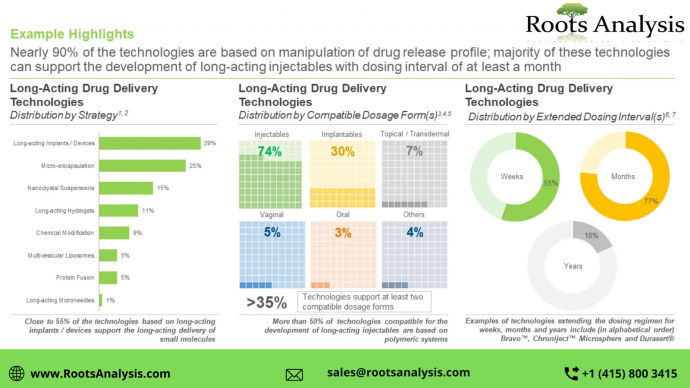
Long-acting drug delivery has emerged as the novel and advanced drug delivery system which manipulate the dosing regimen of the drug in the body in order to sustain its therapeutic level.
Over the last two decades, the pharmaceutical industry has observed a paradigm shift from conventional drug delivery strategies to the long-acting drug delivery of products to treat several disease indications, such as ophthalmic disorders, oncological disorders, neurological disorders and infectious diseases. The long-acting delivery of drug candidates confers several advantages, such as improved patient compliance, reduced dosage requirement, better medication adherence, decrease in failure risk due to inconsistent usage and more convenience to patients. In addition, long acting drug delivery formulations can improve the chemical stability, solubility and polymorphic transformation issues of the active pharmaceutical ingredients.
To request a sample copy / brochure of this report, please visit this
https://www.rootsanalysis.com/reports/long-acting-drug-delivery-market/request-sample.html
Lately, many technologies are being explored to develop long-acting drugs in various dosage formats, such as long-acting injectables, depot injections, implantable devices and combination products. The long-acting drug delivery technologies have come a long way with the inclusion of liposomes, microspheres and polymers for the fabrication of biodegradable and biocompatible delivery system. Apart from this, the interdependency of drug, excipient and release environment plays a crucial role to decide the release kinetics of the drug. Long-acting formulations are more patient compliant, in terms of sharp reduction in the dosing regimen. These drugs are administered infrequently (ranging from once weekly to yearly) owing to the prolonged drug release after a single shot.
The technological advancements for the long-acting profile of the drugs (small molecules, peptides, biologics) have led to the rise in number of novel therapeutics in the market along with the growing number of long-acting molecules in the clinical development pipeline. Of late, the demand for the availability of long-acting vaginal rings as multipurpose prevention technologies for women is also surfacing. Further, the pharmaceutical industry is extensively focusing on the development of long-acting injectables for protein-based drugs and multidrug therapies. Moreover, the potential of long acting injectables is being explored in several debilitating chronic diseases, such as Alzheimer’s, Parkinson’s disease, blindness and HIV. Owing to the advanced LADD technologies, formulation and developmental challenges associated with these complex dosage forms, the reliability on the stakeholders having the expertise in this domain has upsurged. This will eventually aid the drug developers to address the bottlenecks stemming from conventional treatment options and improve the clinical outcome.
For additional details, please visit
https://www.rootsanalysis.com/reports/long-acting-drug-delivery-market.html or email sales@rootsanalysis.com
You may also be interested in the following titles:
1. Smart Labels Market: Industry Trends and Global Forecasts, 2022-2035
2. AI-based Digital Pathology / AI Pathology Market: Industry Trends and Global Forecasts, 2022-2035
About Roots Analysis
Roots Analysis is a global leader in the pharma / biotech market research. Having worked with over 750 clients worldwide, including Fortune 500 companies, start-ups, academia, venture capitalists and strategic investors for more than a decade, we offer a highly analytical / data-driven perspective to a network of over 450,000 senior industry stakeholders looking for credible market insights.
Contact:
Ben Johnson
+1 (415) 800 3415
Ben.johnson@rootsanalysis.com